On Thursday, March 26th, the Congress has validated the Royal Decree-Law 7/2026published in the BOE on March 21, as the centerpiece of the Comprehensive Crisis Response Plan for the Middle East.
A regulation with an ambitious energy block that reinforces self-consumption, boosts electrification, extends competences to municipalities and places the Energy Communities as protagonists of the energy transition.
NEW MUNICIPAL POWERS AND A GREATER ROLE FOR ENERGY COMMUNITIES
The decree expressly recognizes as a municipal competence the promotion and participation in Energy Communities, together with actions related to energy efficiency, electrification and self-consumption.
In addition to this, there is the mandate to approve in three months a specific regulation for Energy Communities and the forecast that this future development will contemplate the possibility of reserving quotas in auctions for projects with citizen participation or driven by local entities.
In addition, the IDAE is endowed with 10 million euros to call for an aid program for Community Transformation Offices (OTCs), with the exclusive purpose of promoting and energizing Energy Communities.
SELF-CONSUMPTION IS EXTENDED UP TO 5 KILOMETERS
The RDL extends the radius of self-consumption through the grid for photovoltaic or wind installations of up to 5 MW located at a distance of up to 5,000 meters from the associated consumers.
The reform also creates the figure of the self-consumption manager and obliges distributors to provide a specific customer service with a free telephone number, electronic channel and automated acknowledgement of receipt for owners and representatives of these installations.
At the same time, it releases 10% of the reserved capacity in certain competition nodes for new renewable installations associated with self-consumption modalities.
TERRITORIAL RETURN IS NOW A LEGAL REQUIREMENT
A standard of social and territorial excellence is created for energy projects, whose recognition may serve as a merit in access and connection, in auctions and for the declaration of preferential projects. In order to obtain this recognition, citizen participation mechanisms will be evaluated, expressly including “participation in the financing of projects through mechanisms such as crowdlending, crowdfunding, or participation in the projects’ shareholding”.
It also introduces a local return obligation for production facilities connected to a voltage equal to or higher than 132 kV, which must directly or indirectly pass on part of their benefits to citizens and local communities in the vicinity.
INCENTIVES FOR EFFICIENT HOUSING AND ELECTRIFICATION
In the area of electrification, Article 9 obliges the Government to approve within one month correction coefficients in the system of Energy Saving Certificates (CAEs) to replace combustion boilers with electric heat pumps, with specific reinforcement for vulnerable households.
The decree allows municipalities to regulate rebates of up to 50% on IBI and up to 95% on ICIO for solar energy or ambient energy installations.
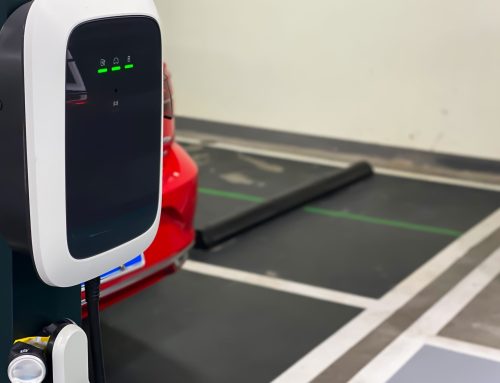
It also extends until December 31, 2026 various tax deductions linked to energy improvement, including those related to the installation of recharging points for electric vehicles.
THE DECREE REORDERS WHO HAS ACCESS TO THE ELECTRICITY GRID
The decree also changes the rules for access to the electricity grid to prevent capacity being blocked for projects that are not developed. From now on, whoever requests access for large consumption will have to assume more commitments: pay for reserving that capacity, clearly indicate the activity for which it is needed and maintain that link for a period of time. If they do not pay or do not update the required information, they may lose the permit.
HIGH-PRIORITY CONSUMPTION: HOUSING, ESSENTIAL SERVICES AND STRATEGIC INDUSTRIES
A unique regime is created for consumption facilities considered to be of high priority. These include residential developments, essential services such as hospitals, water, public transportation or national security, as well as new industrial consumption declared strategic and demand expansions of facilities already in use.
STORAGE GAINS ITS OWN WEIGHT, WITH SPECIAL ATTENTION TO PUMPING
Another of the most important blocks of the decree is storage. The preamble highlights that these facilities will have flexible access permits from a demand perspective.
In addition, the textexpressly reinforces pumped storage; it declares its public utility and allows reserving access capacity for generation and storage demand in nodes reserved for generation or demand tenders. It also provides that certain nodes of the transmission network may be declared a priority for this type of project due to their proximity to the water resource.
DATA CENTERS ENTER THE ENERGY AGENDA
By means of a future royal decree, the Council of Ministers will have to approve energy and environmental sustainability, resilience and digital sovereignty requirements for Data Processing Centers (DPCs) connected to electricity transmission and distribution networks. The regulation adds that failure to comply with these requirements may result in the loss of access and connection permits or penalties.